Equine Monthly
  • Home
  • ARTICLES
    • Bedding
    • Deworming
    • Dr. Tom Schell, DVM, CVCH, CHN
    • Dressage
    • Education
    • Equine Art
    • Equine Careers
    • Equine Health
    • Equine Organizations
    • Equine Stories
    • Equipment
    • Events
    • Feed
    • Julie Christie
    • Legislation
    • Lynn Palm Equestrian
    • Racing
    • Showing
    • Showjumping
    • Tack
    • Training
    • Travel
    • Uncategorized
    • Youth
  • Events
    • Trail Guide
      • Illinois Trails
      • Iowa Trails
      • Minnesota Trails
      • Nebraska Trails
      • North Dakota Trails
      • South Dakota Trails
      • Wisconsin Trails
    • Expos and Fairs
    • Horse Shows and Clinics
  • ADVERTISE
    • Digital/Web Ads
    • Print Ads
  • CONTACT
Equine Monthly
Equine Monthly
  • Home
  • ARTICLES
    • Bedding
    • Deworming
    • Dr. Tom Schell, DVM, CVCH, CHN
    • Dressage
    • Education
    • Equine Art
    • Equine Careers
    • Equine Health
    • Equine Organizations
    • Equine Stories
    • Equipment
    • Events
    • Feed
    • Julie Christie
    • Legislation
    • Lynn Palm Equestrian
    • Racing
    • Showing
    • Showjumping
    • Tack
    • Training
    • Travel
    • Uncategorized
    • Youth
  • Events
    • Trail Guide
      • Illinois Trails
      • Iowa Trails
      • Minnesota Trails
      • Nebraska Trails
      • North Dakota Trails
      • South Dakota Trails
      • Wisconsin Trails
    • Expos and Fairs
    • Horse Shows and Clinics
  • ADVERTISE
    • Digital/Web Ads
    • Print Ads
  • CONTACT
Home ARTICLES The Canadian Horse
  • Education
  • Equine Stories

The Canadian Horse

  • October 15, 2020
  • rmj
Total
1
Shares
0
0
1

Advancement of the Canadian horse began with horses sent from France to Quebec between 1665 and 1670. With a limited number of horses in the colony, they were highly valued, and geographical isolation insured that the stock remained pure. Over the next century, natural and human selection molded a rugged and versatile breed: strong, dashing, and quick. The Canadian horse became popular for farm work, transport, riding, and racing. It earned the nickname “little iron horse.” Canadian horses could excel at any task they were put to.

By 1800 the breed become well known in the United States, being favored for many stagecoach routes throughout New England. It was determined that their genetics could improve other stocks, playing a pivotal role in developing new breeds, such as the formation of the Morgan, the American Saddlebred, and the Standardbred. Though the Canadian horse was celebrated for what it could do, no breed association was ever established in the United States. No efforts were made to maintain a purebred population in this country.

The market for Canadian horses was strong throughout the 1800s, with thousands of horses exported from Canada to the United States. Many of them became cavalry horses, and killed in the Civil War. With so many horses exported or lost, by 1880 the breed was nearly extinct. In 1886, a small group of breeders in Quebec formed a studbook for the Canadian horse. In 1895, an association, the Societe des Eleveurs des Chevaux Canadiens was formed.

Both the Canadian federal government and the provincial government of Quebec maintained breeding programs periodically, but in 1976, fewer than 400 horses remained. Since then, the Canadian horse society has been revitalized and has been successful in promoting the breed as a family horse and national treasure across Canada. There are an estimated 2,000 Canadian horses alive today, and the future of the breed is looking brighter than at any time in the past century.

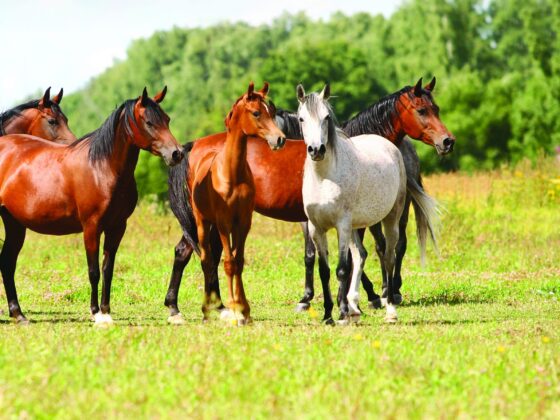
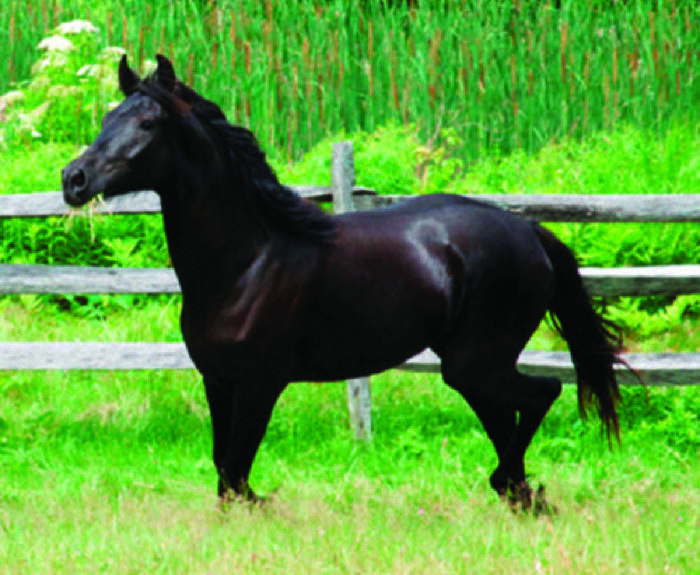
The Canadian horse stands 14-16 hands (56-64″) at the withers and weighs 900-1000 pounds. Canadian horses are solid and very muscular, with a well-arched neck set high on a long, sloping shoulder. The overall impression is one of a round, sturdy, and well-balanced horse. Canadians are primarily black or bay, with full manes and tails. They are energetic without being nervous, and, as appropriate to their heritage, versatile and adaptable for a variety of riding and driving disciplines.

Photo courtesy of Margo Killoran, Three Fold Farm

Total
1
Shares
Share 0
Tweet 0
Pin it 1
rmj

Previous Article
  • Equine Health
  • Equine Stories

Genetic Study Of The Arabian Horse

  • October 15, 2020
  • rmj
View Post
Next Article
  • Dr. Tom Schell, DVM, CVCH, CHN
  • Equine Health

Rebuilding Your Horse’s Core For Health And Soundness

  • October 16, 2020
  • rmj
View Post
You May Also Like
View Post
  • Education
  • Equine Health
  • Equine Organizations

Why Digestive Health Is the Foundation of Every Horse’s Wellbeing

  • Chris Grambort
  • February 10, 2026
View Post
  • Equine Stories
  • Youth

Dick And Diamond, Our Faithful Team

  • rmj
  • August 10, 2025
View Post
  • Equine Stories
  • Showing

Trick Riding – No Guts, No Glory

  • rmj
  • August 11, 2021
View Post
  • Education
  • Equine Organizations

Semper Fi Fund’s Horsemanship Program

  • rmj
  • August 9, 2021
View Post
  • Equine Organizations
  • Equine Stories

Our Hero’s Have Always Been Cowboys

  • rmj
  • July 30, 2021
View Post
  • Education
  • Training

Points Of Contention

  • rmj
  • March 15, 2021
View Post
  • Equine Organizations
  • Equine Stories

The Horses Nobody Knows

  • rmj
  • March 15, 2021
View Post
  • Education
  • Training

Fitness In The Saddle / Proper Pelvis Position

  • rmj
  • March 15, 2021

Leave a Reply Cancel reply

Your email address will not be published. Required fields are marked *

Follow Us
Facebook
Trending Posts
  • 1
    Rebuilding The Horse’s Hoof For Soundness & Health
    • March 15, 2021
  • 2
    Rebuilding Your Horse’s Core For Health And Soundness
    • October 16, 2020
  • 3
    Managing COPD & Allergies In The Horse With A Herbal Blend
    • January 15, 2021
  • 4
    Scratches, Rain Rot & Skin Allergies
    • October 17, 2020
  • 5
    Horse Anxiety And Adaptogens
    • June 17, 2020

CLICK HERE FOR NATIONAL TRAIL GUIDE

About

Equine Monthly LLC PO Box 217. Osseo, WI 54758

Social:
  • https://www.facebook.com/equine.monthly

Phone: 817-307-5944

@2026 Equine Monthly. All Rights Reserved

Input your search keywords and press Enter.