By: Lynn Palm
Any time you are getting into a different discipline, it is important to know what tack is to be used in competition. The smart rider will research ahead of time to learn all the rules about what tack is permitted and what is not.
I recommend practicing at home with the tack you plan to use at the show. This is so important! Train at home with the bridles, bits, and saddles/pads that you would use at a show. This enables you and your horse to be familiar with the tack and helps avoid unpleasant surprises on show day.
Most people will have a nice show saddle that fits the horse and rider, but never use it unless they are at a show. Instead of using their “good” saddle at home to learn and practice in, they’ll use a “working” saddle, one of poor quality that does not fit the horse and rider. If you want to ride well you have to have properly fitting tack for you and your horse. Properly fitting tack enables you to have better balance in the saddle.
Bits are another topic. Some people will train at home with a milder bit and use a harsher bit at the show. I advise against this practice because it will only cause problems. When a horse goes to a show, he is in new and unfamiliar surroundings. A new place will always make a horse more sensitive. Using a more severe or responsive bit to get control of a horse who is more reactive at a show will only intensify the horse’s reactions.
Keep the same bit and use the mildest bit possible to promote relaxation. A relaxed mouth will always give you a more responsive horse.
The Western Dressage Association of America is very new, only a few years old. The association’s rules can be found on their website, http://westerndressageassociation.org/. Please read all the tack and attire rules. Let’s summarize what tack is required:
Headstalls and Bits
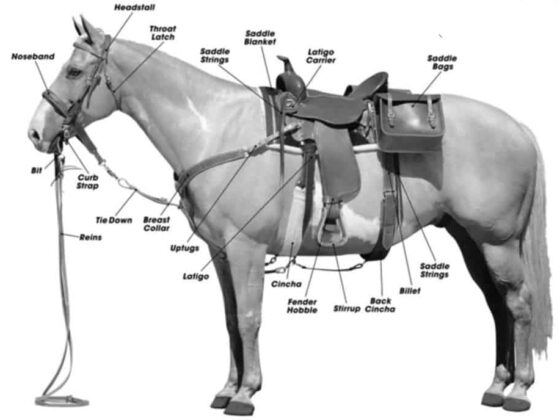
Western headstalls – a western cavesson is optional. A western cavesson (flat, rolled, braided, or plain, with an adjustable noseband), or pencil bosal with or without a get-down rope with space for two fingers placed between the cavesson and the jowl of the horse is allowed. No metal (except for the buckle on the cavesson), studs of any kind, or other substances can be used in conjunction with, or as part of, a Western cavesson.
Smooth snaffles, 3-piece smooth snaffles, or mullen mouthpiece bits are allowed. Use the snaffle for any level test and all ages of horses. Snaffles are ridden with two hands. Refer to website for acceptable mouthpieces.
A hackamore (bosal) is permitted on a horse of any age, and at any level. A hackamore includes a bosal, rounded in shape and constructed of braided rawhide or leather, and must have a flexible non-metallic core attached to a suitable headstall. No other material of any kind is to be used in conjunction with the bosal, i.e. steel, metal or chains. Bosals may be wrapped with smooth electrical tape to prevent rubbing.
Curb bits can be used on any age of horse and any level. They can be ridden with two hands. If you refer to the tack rules, you will find the specific sizes and types of bits that are legal. (You should also review the section on illegal bits so you don’t use the wrong one.)
Saddles and Whips
Western saddles that are permitted include stock saddles, work saddles, Aussie, native or side saddle can be used. Silver on saddles will not count over good working equipment. A horn on the saddle is not required, but Western style fenders are required.
- A breastplate and/or crupper may be used.
- Tapaderos are permitted except in Western Dressage Equitation.
- Whips are allowed no longer than 47.2″ including lash.
Be sure to peruse the website for more information on tack. And check out the section on illegal equipment, as it shows other miscellaneous Western tack that is not permitted.
With my accomplished horseman/saddlemaker husband, we have designed a Western Dressage saddle (see www.lynnpalm.com under “Boutique” on the home page). It’s designed specifically for this new and fun competition.

Hope you truly enjoy this sport — my next articles will give you more information about Western Dressage!