ITHACA, N.Y. – When traditional treatments for Atrial Fibrillation (AF) fail, a new procedure offered by cardiologists at the Cornell University College of Veterinary Medicine, provide an alternative way to reset the quivering heart of a horse back to its normal heartbeat: Transvenous Electrical Cardioversion (TVEC).
“I’m very excited to be able to offer this procedure,” said Dr. Bruce Kornreich, associate director of the Feline Health Center and staff cardiologist. “AF is a very common condition in horses that we’re often asked to diagnose and treat. This is another tool in our toolbox to convert these patients back to a normal heart rhythm.” TVEC, which involves placing electrodes in the heart to reset its rhythm with an electric shock, was offered by the Cornell University Equine Hospital until about five years ago when the hospital could no longer purchase catheters needed for the procedure. Recently, the catheters came back onto the market.
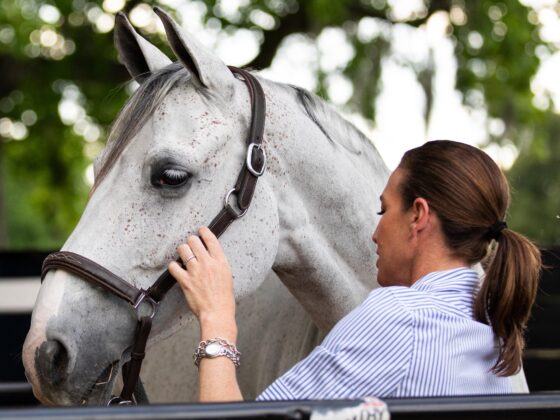
At around the same time, Cornell veterinary students examined On-Star, a 19-year-old mare from the Cornell Equine Park teaching herd. “The students picked up the arrhythmia, and we diagnosed it as AF,” says Dr. Gillian Perkins, medical director of the Equine and Nemo Farm Animal Hospitals, who coordinated the procedure.
AF is the most common cause of irregular heartbeat in horses, and veterinarians often diagnose the condition in racehorses. AF occurs when the organized electrical signals that normally control heart rate and contraction become disorganized, causing a rapid and erratic heartbeat. Horses can survive for years with AF, but the condition often causes poor performance.
Traditionally, veterinarians have treated AF with quinidine, a drug that can reverse irregular heartbeat in about 85 percent of treated horses. The drug has several possible side effects, however, and for horses that don’t respond well to quinidine, or that have had AF for several years, TVEC may be a better treatment option.
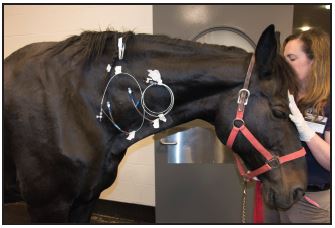
TVEC works like the paddles of a defibrillator doctors use on humans, and even makes the horses “jump” from the muscle spasm. But horses’ thick chest muscles and lungs make it impossible to shock the heart from the outside; veterinarians place 3-foot-long catheters tipped with electrodes into the heart via the right jugular vein.
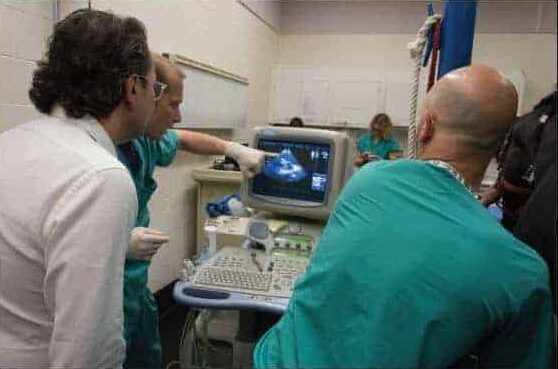
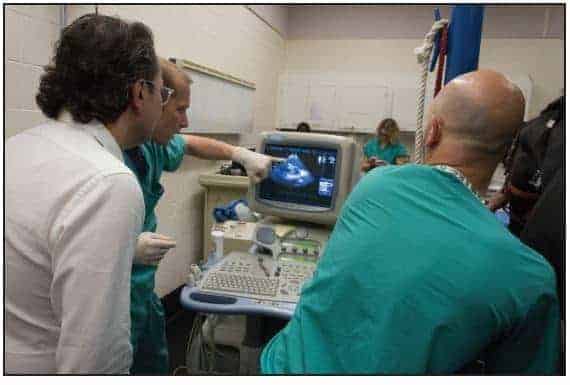
“The most difficult part of the procedure for us is to guide the catheter,” said Cornell cardiologist Romain Pariaut. “In horses, it’s a long path to the heart from the outside.” They use a cardiac ultrasound to monitor their progress and perform an X-ray to verify the metal electrodes are sandwiching the right atrium. Finally, they anesthetize the horse, stand back, and apply a timed electric shock to return the heart to a normal rhythm.
On-Star’s procedure took approximately four hours and required a veritable village of clinicians: cardiologists, internists, radiologists, anesthesiologists and licensed veterinary technicians. Combined with the expense of the catheters, the initial diagnostic evaluation and hospitalization, the procedure costs $3,500 to $4,000.
TVEC carries its own risks, not the least of which are associated with the general anesthesia. With this in mind, Pariaut and Kornreich tried to reduce the amount of time On-Star was under anesthesia through careful attention to electrode placement.
With TVEC and quinidine there is also the possibility that horses will spontaneously go back into AF. One recent study found that between one-third and one-half of horses successfully converted from AF to normal heart rhythm will revert after treatment. So far, On-Star is doing well and has had no complications.
Funding from the Harry M. Zweig Memorial Fund and the large animal medicine and cardiology sections made TVEC possible for On-Star and for future patients diagnosed with AF.
Media note: A video of the procedure is available on YouTube. The video as well as additional photographs and videos can be downloaded at https://cornell.box.com/v/TVEC