By Jackie Bellamy-Zions, Equine Guelph
Nothing can drain the color from a horse owner’s face quicker than hearing the word COLIC! Winter is an important season to focus on colic prevention and ward off water woes that can lead to impaction in the equine gut.
Equine Guelph has many resources to reduce your horse’s risk of colic, including a FREE interactive online healthcare tool, the Colic Risk Rater. The importance of access to clean, fresh water, 24 hours a day, to keep everything flowing smoothly, cannot be overstated and is one of the top 12 tips discussed among management practices. For an even deeper dive into digestive health – Equine Guelph sponsors online courses, such as Gut Health and Colic Prevention, on the Horse-Portal.ca. Both resources are generously sponsored by CapriCMW Insurance Services Ltd.
What you need to know about horses and H2O
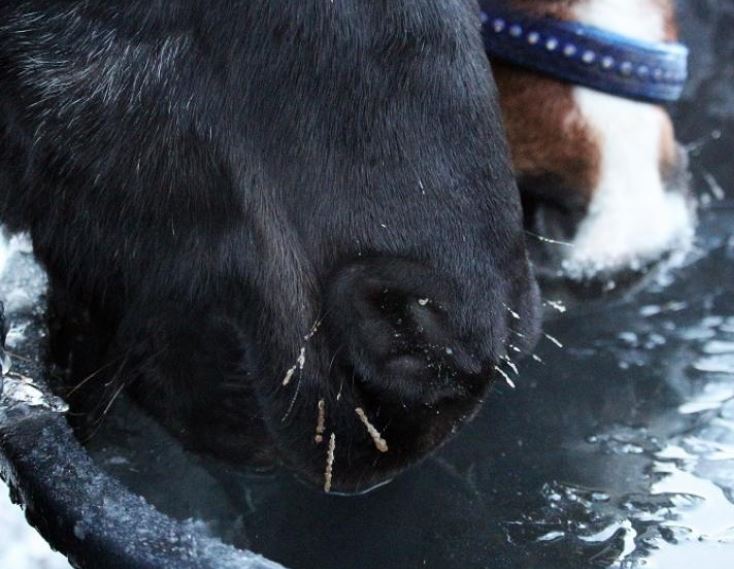
Never assume they are drinking! Just because water is available does not mean your horse is drinking enough. Horses should drink about 3 7 to 45 litres of water per day in order to stay healthy, and they will often drink less water when it is icy cold, particularly if there are any dental issues. It is also a misnomer to believe all horses will break through a thin layer of ice to access their water source. A heater is the best option, not only for the fussy drinker but also to ensure troughs do not freeze over during overnight hours or on frigid days. A Penn State University study has shown that increasing water temperature from just above freezing to 39-64° Fahrenheit will increase the amount of water consumed by up to 40%. Make sure the heater is properly installed and check if it is in good repair and operating safely. If you see horses standing by a trough but not drinking, be sure to check there is no electric current due to a malfunctioning heating element.
Dehydration: This is a serious issue increasing the risk of impaction colic. Monitor the horse for signs of dehydration. Discuss how you can do this with your veterinarian. A “skin pinch” on the shoulder of the horse is a useful tool to assess hydration by seeing if there is any delay in the skin flattening back down (this is called skin tenting). Slowed skin response may indicate a degree of dehydration.
Salt: If your horse is not drinking an adequate amount, in addition to monitoring them for dehydration, consider providing free choice loose salt for the horse to take in what they need.
More water at feedtime: You can add water to concentrate ration and/or soak the hay for 10 minutes prior to feeding as this will bring more water into the gut. You may also wish to discuss with your vet or equine nutritionist the use of soaked and shredded beet pulp as an addition to the diet for getting more water into the digestive system. Adding a bran mash once a week was once a popular practice, but the sudden introduction of a different feed is actually another colic risk factor. Adding water to their regular feed is recommended. Being consistent and making feed changes slowly is another one of the top 12 tips in the Colic Risk Rater tool.
24/7 access to water: Horses are trickle feeders and their digestive systems operate optimally when forage is always available. This means water must be available at all times to aid in digestion and avoid blockages. In winter water needs may increase as a result of the increased hay being consumed, which is also much dryer than moisture rich pasture. Always make sure there is lots of fresh, clean water provided 24 hours a day.
Snow is not a substitute for water! Ten inches of snow equals one inch of water. If 2 inches of snow fell, a horse would need to consume over four football fields worth to get enough water.
More recommended and required practices for watering horses are listed in the National Code of Practice for the care and Handling of Equines including: checking automatic watering systems daily to ensure they are dispensing water properly and testing water quality at least annually, unless it is from a previously tested water supply safe for human consumption.
Mike King, of CapriCMW, is a dedicated horseman who believes in the importance of education for horse owners. He addresses why it was so important for his organization to partner with Equine Guelph on colic prevention programs, “Given our decades of experience in insuring horses from coast to coast, we know that colic is one of the highest risk factors for death in the Canadian herd. We can think of no better risk management tool to prevent colic than education.”
This winter, take action to further your knowledge on colic prevention
Learn more about best practices to reduce your horse’s risk of colic by taking 15 minutes to assess your risk with the free Colic Risk Rater healthcare tool www.equineguelph.ca/colictool, and then sign up for the next offering of Equine Guelph’s online courses, such as Gut Health and Colic Prevention, on the Horse-Portal.ca