Summer
As the seasons change, so do your horse’s hooves. One of the major concerns a hoof care provider may have throughout the dry seasons is compacted sole along with extremely dry, hard hooves. One way to help your farrier or trimmer out is to run over your water trough a few days before they are scheduled to come out. This will allow your horses’ hooves to soak up enough moisture to help soften them up for a trim. Here is a great example of what running a water trough over can do!
Shimmy (left) drinks out of the trough with an overflow. Morada (right) drinks out of the other trough that doesn’t overflow.
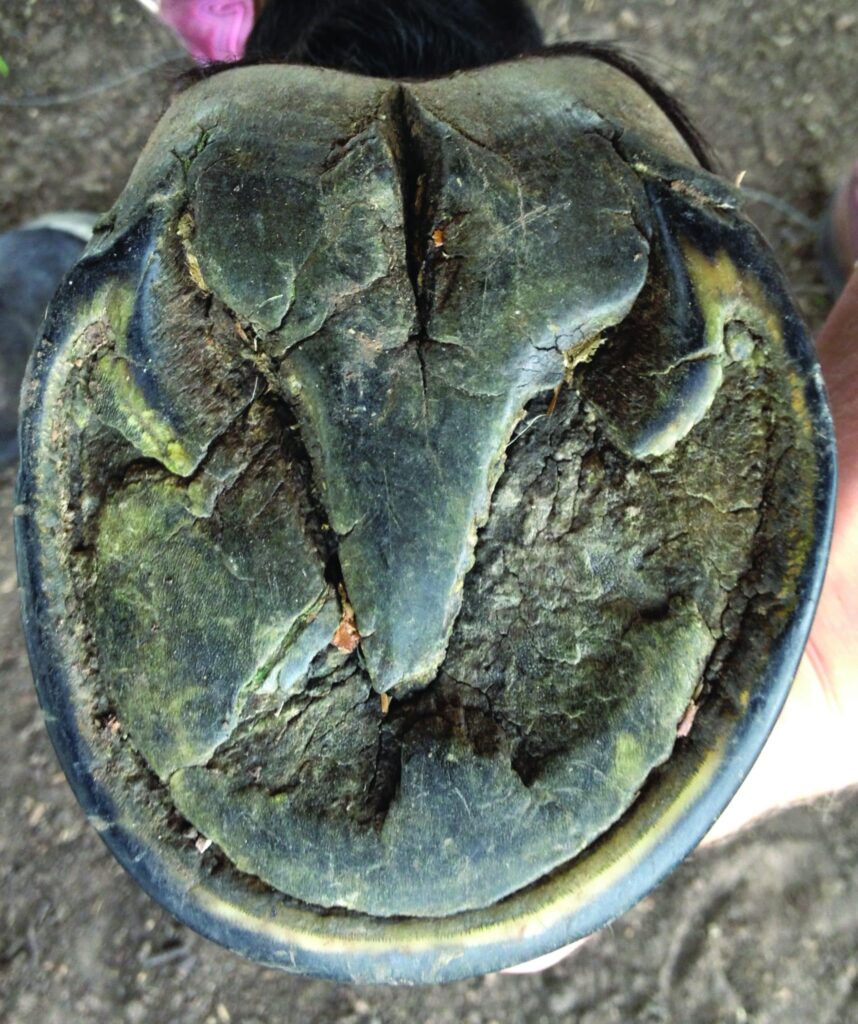
Both hooves display compacted sole due to the dry conditions that we experience in North Texas during the summer months. As the hoof grows and produces hoof wall and sole, the sole will start to compact if it cannot shed off properly, creating a sole that is hard and shiny. The compacted sole gives you a false impression of the hoof being flat-footed. Both horses are on a 4-acre grass pasture with no rocks so they are unable to wear their hooves as much as a horse that travels on a more rough terrain.
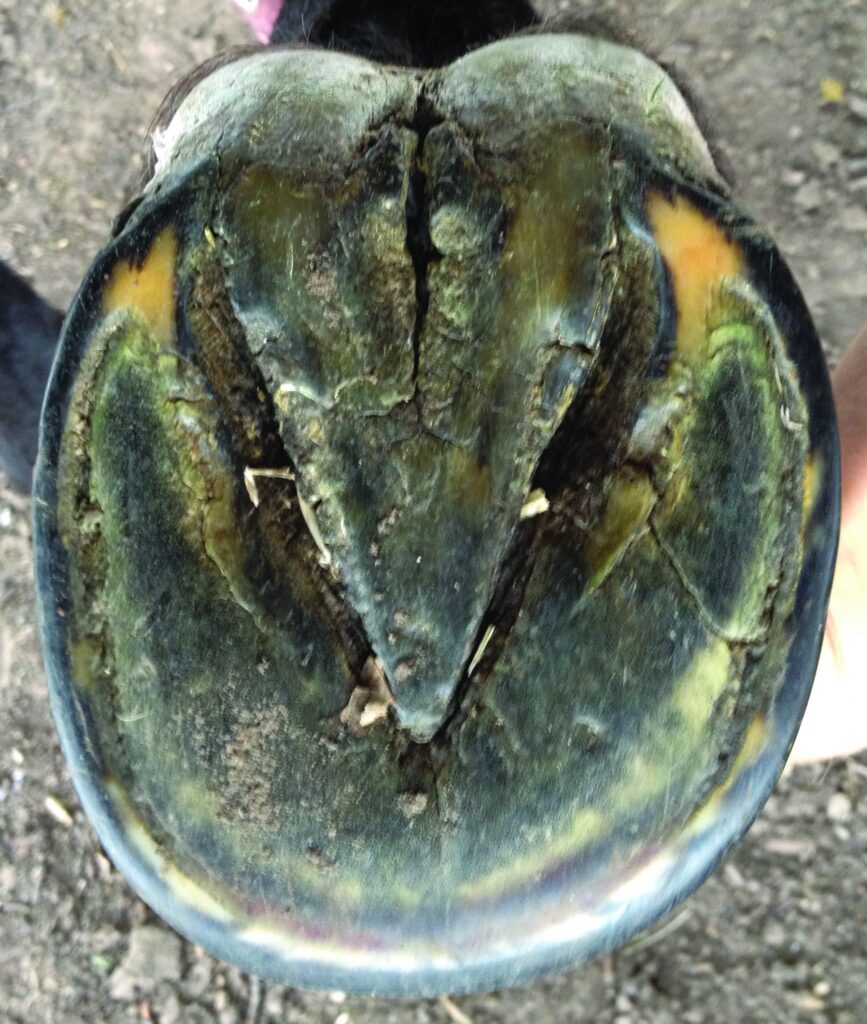
On Shimmy’s hoof, you can clearly see the layer of compacted sole on top of his normal callused sole. Morada’s hoof is still compacted with exfoliated sole. She does have a slight crack forming in the compacted sole on the right side to the right of the frog. With a few days of constant moisture, her feet will start to look like Shimmy’s.
The main reason I ask my clients to soak their horses feet is because a hoof like Morada’s is dangerous to trim. When the sole gets impacted like that, the callused sole often is packed tightly below the compacted sole. If a trimmer were to try and nip out the compacted sole, the callused sole, and sometimes the live sole, could pop out as one piece and live sole and tissue would be exposed.Compacted sole can cause excess pressure in the hoof as well, which in turn can cause bruising, abscessing and lameness.If your horse’s feet look like the hoof on the right, I suggest soaking a few days in advance to break up the compacted sole so your horse can get a safe and proper trim.
Winter
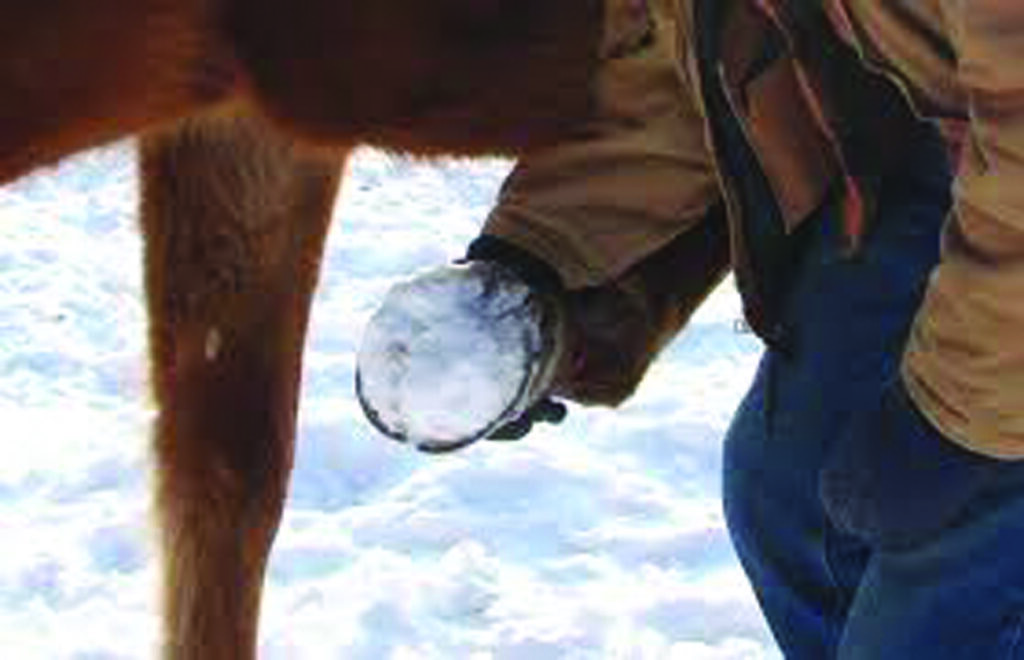
As the more northern part of the country moves into their wet, snowy season, there are a few things to consider before saddling up and hitting the trails. One of the major concerns for hoof care during the winter is right after that fresh snow when the horses are running around in the pasture collecting what most people call “ice balls” in their hooves. These packed clumps of ice and snow can wreak havoc on your horse’s feet. There are many at-home remedies out there, such as coating the bottom of the hoof with cooking spray, coconut oil, petroleum, jelly, etc., but they don’t seem to last very long. When hooves build up that ice ball, it creates an overload of pressure and loss of traction, which can become dangerous for a rambunctious horse. If the ice is packed in there for a long period of time, it can lead to sole bruising and abscessing. Horses have sweat glands on the bottom of their feet and with enough energy created in their body from eating hay from a round bale all day, most of the time the snow will come out in one big chunk.
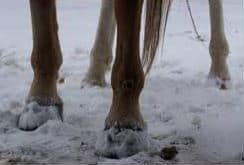
Here is an example of how tightly-packed a hoof can get.
Many farriers will suggest leaving your horse barefoot during the winter months to give the hoof wall a break. A barefoot hoof actually has more traction than a metal shoe, so this would be beneficial during snowy months. Both a shod and barefoot hoof will build up snow and ice, but the added traction will help with slipping and sliding in the icy pastures. A good maintenance routine for winter riding is to pick out hooves before and after riding and check for signs of bruising or abscessing. You can use your oil of choice to coat the bottom of the hoof if you find one that works for you. Another great winter riding aid that won’t permit any buildup of snow or ice in the hoof is riding boots. These are a great alternative especially if you are taking your horse barefoot for the winter. They will add comfort and traction for trails and arena work as well.