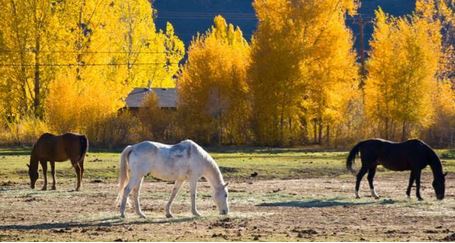
Who would have thought the stately maple, with its festoon of fall color, could wreak havoc on horses across the world?
By: Kentucky Equine Research Staff
A muscle disorder in horses called atypical myopathy has been linked to a toxin contained in the seeds and seedlings of certain maple trees. While atypical myopathy is the term used in Europe, the disease is referred to as seasonal pasture myopathy in the United States and Canada.1,2
Mature Maple trees shed thousands of distinctive winged fruits called samaras each year, each characterized by a paper-thin, nearly transparent tissue that envelops a seed. Children call them whirlybirds or whirligigs. These seeds and seedlings contain hypoglycin A (HGA) and methylenecyclopropylglycine (MCPG), compounds that interrupt energy production once they are converted to their metabolites after ingestion. Signs of intoxication in horses include acute rhabdomyolysis involving weakness, recumbency, myoglobinuria, stiffness, depression, muscle tremors, sweating, and congested mucous membranes.
A team of European researchers put together a short list of frequently asked questions about the disease and answered them using information gleaned from standardized questionnaires.3
The questionnaires were available on two websites, an informal one that notifies veterinarians and horse owners about peak disease risks (Atypical Myopathy Alert Group) and a second that monitors disease progression in France through reports by select veterinarians. Information from over 3,000 cases of atypical myopathy was gathered from 14 countries.
These data, combined with a review of the scientific literature, were used to answer five frequently asked questions.
Which maple trees are toxic? Trees belonging to the maple genus are planted throughout the world, often because they produce colorful autumn foliage. Not all species are poisonous to horses, however, and not all species have been assessed for toxicity. Specific to this disease, the sycamore maple (Acer pseudoplatanus) in Europe and the box elder (Acer negundo) in North America are the predominant trees of interest.
Researchers found that few horse owners could differentiate between tree species, even though an abundance of educational material is available on the internet. Wilted leaves and bark of the red maple (Acer rubrum) can also be toxic to horses but has not been implicated in seasonal pasture myopathy.
How can the risk of atypical myopathy be reduced when horses are on pasture? Researchers suggested that all pastures be canvassed for toxic seeds and seedlings. Case studies have revealed areas of felled trees with dead leaves as well as piles of dried leaves that had fallen naturally from healthy trees are a risk factor. Additionally, winds can carry samaras hundreds of meters from the parent tree, so pasture contamination may result from trees on adjacent properties.
Horses that are on pasture at all times seem to be at higher risk, probably because an absence of grass encourages horses to investigate other sources of nourishment. Because the toxin is water-soluble, it can pass from plants to water directly, so any area with freestanding water, such as ponds, should not be used as pasture, particularly if suspect trees are in the area and samaras are present.
Risk for horses can be alleviated through proper management, primarily through reduced exposure to toxic trees by managed grazing, and through reputable feed-supply chains and safe water sources.
Nearly all cases of atypical myopathy occur when horses are on pasture. If ridding a pasture of the noxious trees is impossible, then stabling horses is another way to prevent disease, though all-day stabling comes with its own set of welfare issues, including a rise in stereotypies and colic. One study indicated that limiting grazing during high-risk periods might be prudent, such as in autumn or in spring following an autumn outbreak. Removal of dead wood and leaves from grazing areas is also practical.4
Horses fed concentrates and hay year-round had a decreased risk of atypical myopathy, likely because owners did not depend on grass to meet the energy requirements of horses. Also, according to the researchers, “atypical myopathy results from an energetic imbalance subsequent to poisoning, and feed provides energy substrates, especially carbohydrates, that support the energetic metabolism, plus vitamins and antioxidants that are known to increase the chance of survival.”
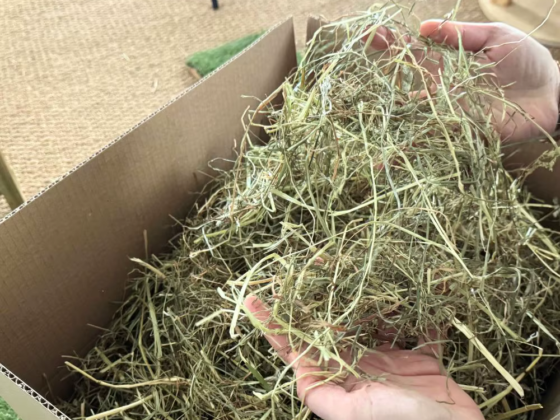
Hay may also contain samaras, so it should be purchased from reputable growers. Forage products should not be made in areas where trees stand and shed samaras and leaves. When fed in the field, hay should not be fed from the ground if a sycamore tree is nearby, as horses may pick up toxic material.
What pastures are at risk? All pastures with neighboring maple trees should be judged unsafe for horses. Of note, atypical myopathy is considered an emerging disease, and multiple cases have been identified whereby no previous deaths have been recorded in an area.

- When do cases occur in spring and autumn? While cases of atypical myopathy occur in both seasons, far more transpire in autumn. A clarification: the descriptions “spring” and “autumn” should not be taken literally, as cases do not fall exactly within the seasonal template. Spring cases have been recorded from March 1 to May 31, and autumn cases from October 1 to December 31. Seasonality of the disease has not been determined but cannot be attributed to frost or deep freezing, as the toxin can withstand extreme cold. A flush of forage in the late spring and summer might keep horses from nibbling on unusual feed stuffs, like seeds and seedlings.
- Valberg, S.J., B.T. Sponseller, A.D. Hegeman, J. Earing, J.B. Bender, K.L. Martinson, S.E. Patterson, and L. Sweetman. Seasonal pasture myopathy/atypical myopathy in North America associated with ingestion of hypoglycin A within seeds of the box elder tree. Equine Veterinary Journal 45:419-426.
- Finno, C.J., S.J. Valberg, A. Wunschmann, and M.J. Murphy. 2006. Seasonal pasture myopathy in horses in the Midwestern United States: 14 cases (1998-2005). Journal of the American Veterinary Medicine Association 229:1134-1141.
- Votion, D., A. Francois, C. Kruse, B. Renaud, A. Farinelle, M. Bouquieaux, C. Marcillaud- Pitel, and P. Gustin. 2020. Answers to the frequently asked questions regarding horse feeding and management practices to reduce the risk of atypical myopathy. Animals 10:365.
- van Galen, G., C. Saegerman, C. Marcillaud Pitel, F. Patarin, H. Amory, et al. 2012. European outbreaks of atypical myopathy in grazing horses (2006-2009): Determination of indicators for risk and prognostic factors. Equine Veterinary Journal 44:621-625.