Leading is a skill for every trail rider…
By: Robert Eversole
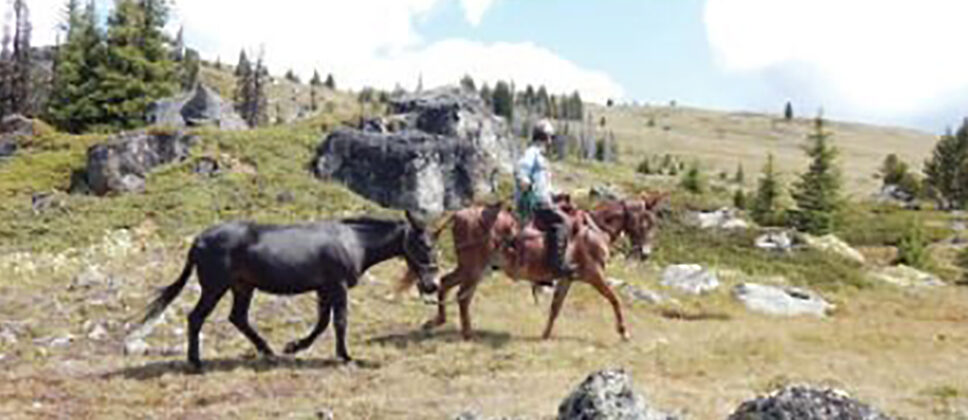
Are you able to lead another horse from yours? Is your animal able to be led by another horse? You should be. Leading is not just a skill for packers but is an essential skill for every trail rider.
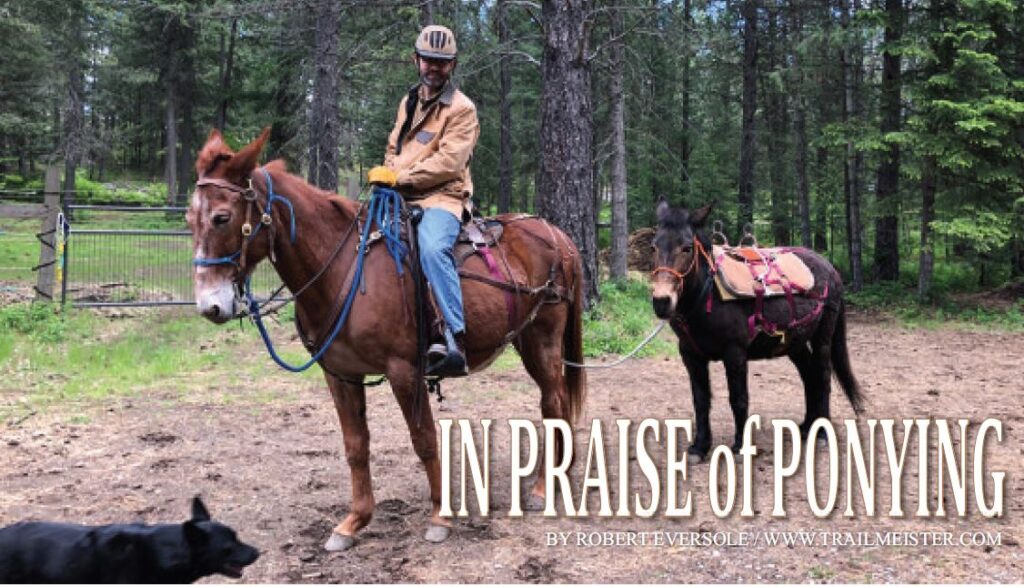
Put simply, ponying is the act of leading a horse alongside the animal you’re riding. It sounds simple but it’s a multifaceted job of riding your own horse while also paying attention to another, all while holding the reins in one hand and a lead rope in the other. Why would anyone want to do this? Here are a few examples:
- To introduce a new horse to the trail,
- To lead a pack horse,
- To assist another rider,
- To condition a young or older horse.
In each of the above cases, you’ll need to know how to pony correctly to keep you, your horse, and the ponied horse safe.
Preparing you:
Being ready to pony also means that you need to be comfortable with what you must do when ponying another horse. Get used to riding your animal one-handed. Be able to rein with either hand while holding a lead in the other. Be able to switch hands on the go.
Preparing your riding animal:
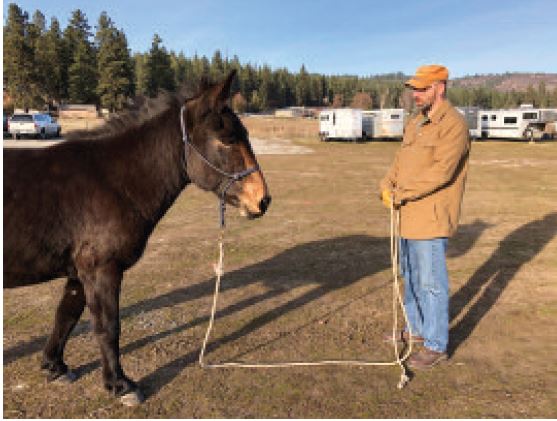
Before attempting to lead another animal, your riding horse, or mule, should be comfortable with having a rope all around him. He needs to be OK with feeling a lead rope alongside his hindquarters, and even for the possibility that the rope might get around a leg or under his tail. When I’m working with my animals I’m constantly tossing the lead rope around their hips, along their legs, and asking them to bend their necks and come around to face me. I do this from all sides, left, right, front, and back.
Once you can do that from the ground it’s time to try the same exercises from the saddle. Your riding animal should calmly allow ropes to touch his legs and tail, and should be able drag logs without spooking. You don’t have to be a professional roper and a lariat isn’t necessary. Just swing a lead rope to accustom your horse to the motions on both sides. Be careful.
I feel that rope training is an essential exercise for every animal. Your riding animal needs to be responsive and not afraid of a rope rubbing on it.
Preparing the animal to be led:
It’s my opinion that every trail horse should be able to be ponied. There many reasons why, but my biggest is that if you depart your ride unexpectedly (say in a helicopter) your riding partner should be able to safely pony your horse back to the trailhead. Start from the ground before you start leading from another horse. The horse you plan on ponying should be able to be led, and led well, from the ground before you try it from the saddle. Once the pony horse prospect has good ground manners and is light and alert at the end of a lead rope, transitioning to ponying won’t be traumatic. Work from the ground until your prospect is consistent and responsive from a distance. This ground work not only will prepare your horse to be led from horseback it will help him or her become a much better, more respectful partner that doesn’t pull or crowd you. Both good things.
The equipment:
- Functional saddle with a solid tree – treeless or flexible tree saddles can deform and unevenly distribute pressure causing pain to your riding horse,
- Rope halter for the horse to be ponied – the rope halter will reinforce your cues,
- 12 foot lead – I’ve used both shorter and longer leads. 12 feet works best for me,
- Gloves –Rope burn is a serious thing and it’s not pleasant.
The dally:
Once the three of you (your riding horse, the horse to be ponied, and yourself) are ready to head out you’ll be tempted to use your saddle horn. Don’t. Use the horn to hold lunch, not tie off your lead rope. Should a ride become eventful while ponying you’ll want to instantly release all connections to the pony horse. It’s much better to dismount and pick up the lead than to be dragged off the side of a mountain because you were hard tied to an animal that lost its footing. Successfully ponying is dependent upon the response and respect you develop on the ground. If your horse handles well and is responsive on the halter rope on the ground, that training will come through when you pony him. Take the time to develop those skills.