Equine Monthly
  • Home
  • ARTICLES
    • Bedding
    • Deworming
    • Dr. Tom Schell, DVM, CVCH, CHN
    • Dressage
    • Education
    • Equine Art
    • Equine Careers
    • Equine Health
    • Equine Organizations
    • Equine Stories
    • Equipment
    • Events
    • Feed
    • Julie Christie
    • Legislation
    • Lynn Palm Equestrian
    • Racing
    • Showing
    • Showjumping
    • Tack
    • Training
    • Travel
    • Uncategorized
    • Youth
  • Events
    • Trail Guide
      • Illinois Trails
      • Iowa Trails
      • Minnesota Trails
      • Nebraska Trails
      • North Dakota Trails
      • South Dakota Trails
      • Wisconsin Trails
    • Expos and Fairs
    • Horse Shows and Clinics
  • ADVERTISE
    • Digital/Web Ads
    • Print Ads
  • CONTACT
Equine Monthly
Equine Monthly
  • Home
  • ARTICLES
    • Bedding
    • Deworming
    • Dr. Tom Schell, DVM, CVCH, CHN
    • Dressage
    • Education
    • Equine Art
    • Equine Careers
    • Equine Health
    • Equine Organizations
    • Equine Stories
    • Equipment
    • Events
    • Feed
    • Julie Christie
    • Legislation
    • Lynn Palm Equestrian
    • Racing
    • Showing
    • Showjumping
    • Tack
    • Training
    • Travel
    • Uncategorized
    • Youth
  • Events
    • Trail Guide
      • Illinois Trails
      • Iowa Trails
      • Minnesota Trails
      • Nebraska Trails
      • North Dakota Trails
      • South Dakota Trails
      • Wisconsin Trails
    • Expos and Fairs
    • Horse Shows and Clinics
  • ADVERTISE
    • Digital/Web Ads
    • Print Ads
  • CONTACT
Home ARTICLES In-Hand Whip To Reinforce Voice Commands
  • Lynn Palm Equestrian
  • Training

In-Hand Whip To Reinforce Voice Commands

  • July 15, 2021
  • rmj
Total
0
Shares
0
0
0

By: Lynn Palm

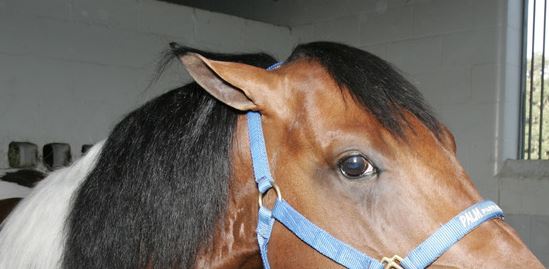
When working your horse in hand, start with a simple cotton longe line, clipping it to the snap on the same side of the halter as you are working the horse.  Never use the snap at the bottom of the halter for ground training.  I only use the bottom snap when I’m doing routine handling or leading, and only with a horse that is fully mannered and responsive to my commands.


If I find that I need more response, respect or attention from my horse, I will increase the measure of my control by changing how I attach the longe line to the halter.  My next step is to put the cotton longe line through the halter ring on the side I am working on, under the horse’s chin, clipping it on the ring on the opposite side of the halter.  For safety, always make sure that the button of the snap is facing outwards.  It will be easier to release in case of an emergency. 

If that step does not give me the response I need, I will pass the longe line through the halter’s lower side ring on the side I’m standing, over the nose, and snap it to the ring on the opposite side of the halter.  As I mentioned before, most halter rings are not large enough for a longe line to pass through them.  If you find this is your situation, slip the longe line under the halter’s chin strap from the side you are working on, then loop it over the nosepiece before clipping it to the opposite side ring. 

This is exactly why I designed the Palm Partnership Training Halter!

If I find I still need even more control, I will change from a simple longe line to the type ending in a “stud” chain.  Make sure the length of the chain is long enough so that when fitted on the horse, at least 5 inches of chain extends from the halter.  This gives enough leverage and enables use of the chain without abrupt or delayed reactions. If the length of chain is shorter than 5 inches, it can lock against the chin or nose, preventing the lightness that I want the chain to create for me.  Start with the chain fastened under the chin, as described above, progressing to the “longe-line-over-the-nose” step if more control is needed.

Use a 3 to 4-foot dressage whip to reinforce your voice commands.  An “in-hand” whip is a valuable tool to encourage your horse to move forward without pulling on the longe line.  Whether you are working on the near (left) or off (right) side of your horse, your whip is held in the same hand that is holding the excess longe line. 

Use a dressage whip to reinforce your voice commands…

Your Next Step…

Before beginning any ground training, practice using an in-hand whip properly.  To use an in-hand whip as a tool for forward motion, extend your outside arm straight back behind your body.  This must be done with relaxation and slowness through your shoulder. Then through a slight twisting of your wrist, bring the whip toward the horse’s hip and touch him at the hip or the top of the hind leg (gaskin).  There should be enough slack, between your “lead” hand (nearest the horse) and the “outside” hand holding the loosely coiled excess longe line, to enable you do this movement slowly and smoothly.  When the whip is pointing downward, it is not an active tool.

When using the whip you want to touch your horse in the very precise area I just explained, not hit it in the flank.  Otherwise your horse will get confused or mad. Ask a friend to “stand in” for your horse and practice proper whip application, before trying it with your horse!

Two common errors to avoid include bringing the whip down too low and using your entire arm to move it.  This will cause it to touch the flank instead of the rump.  The other is bringing the whip up too high – not even touching the horse.  This happens when your arm is not brought far enough behind you.  Don’t put your horse through confusion while you are learning how to properly use an in-hand whip—practice first!

Until then, follow your dreams.

Total
0
Shares
Share 0
Tweet 0
Pin it 0
rmj

Previous Article
  • Lynn Palm Equestrian
  • Training

Beginning Ground Training

  • May 12, 2021
  • rmj
View Post
Next Article
  • Bedding

Choosing The Right Type Of Bedding

  • July 30, 2021
  • rmj
View Post
You May Also Like
View Post
  • Equine Health
  • Training

Music Calms Horses’ Emotional State

  • Larry Grambort
  • March 4, 2025
Rear view of man with a gray cowboy hat and an embroidered jacket
View Post
  • Equipment
  • Training

Halo Smart Round Corrals

  • rmj
  • March 28, 2023
View Post
  • Lynn Palm Equestrian
  • Training

Golden Rules For Ground Training – Part 2

  • rmj
  • October 15, 2021
View Post
  • Lynn Palm Equestrian
  • Training

“Come To Me” Training

  • rmj
  • September 15, 2021
View Post
  • Lynn Palm Equestrian
  • Training

Golden Rules For Ground Training – Part 1

  • rmj
  • September 15, 2021
View Post
  • Lynn Palm Equestrian
  • Training

How Horses Like To Learn

  • rmj
  • August 16, 2021
View Post
  • Lynn Palm Equestrian
  • Training

Beginning Ground Training

  • rmj
  • May 12, 2021
View Post
  • Lynn Palm Equestrian
  • Training

Dealing With A Horse That “Pins It’s Ears”

  • rmj
  • April 15, 2021

Leave a Reply Cancel reply

Your email address will not be published. Required fields are marked *

Follow Us
Facebook
Trending Posts
  • 1
    Managing COPD & Allergies In The Horse With A Herbal Blend
    • January 15, 2021
  • 2
    Rebuilding Your Horse’s Core For Health And Soundness
    • October 16, 2020
  • 3
    Scratches, Rain Rot & Skin Allergies
    • October 17, 2020
  • 4
    Horse Anxiety And Adaptogens
    • June 17, 2020
  • 5
    Rebuilding The Horse’s Hoof For Soundness & Health
    • March 15, 2021

CLICK HERE FOR NATIONAL TRAIL GUIDE

About

Equine Monthly LLC PO Box 217. Osseo, WI 54758

Social:
  • https://www.facebook.com/equine.monthly

Phone: 817-307-5944

@2026 Equine Monthly. All Rights Reserved

Input your search keywords and press Enter.