Equine Monthly
  • Home
  • ARTICLES
    • Bedding
    • Deworming
    • Dr. Tom Schell, DVM, CVCH, CHN
    • Dressage
    • Education
    • Equine Art
    • Equine Careers
    • Equine Health
    • Equine Organizations
    • Equine Stories
    • Equipment
    • Events
    • Feed
    • Julie Christie
    • Legislation
    • Lynn Palm Equestrian
    • Racing
    • Showing
    • Showjumping
    • Tack
    • Training
    • Travel
    • Uncategorized
    • Youth
  • Events
    • Trail Guide
      • Illinois Trails
      • Iowa Trails
      • Minnesota Trails
      • Nebraska Trails
      • North Dakota Trails
      • South Dakota Trails
      • Wisconsin Trails
    • Expos and Fairs
    • Horse Shows and Clinics
  • ADVERTISE
    • Digital/Web Ads
    • Print Ads
  • CONTACT
Equine Monthly
Equine Monthly
  • Home
  • ARTICLES
    • Bedding
    • Deworming
    • Dr. Tom Schell, DVM, CVCH, CHN
    • Dressage
    • Education
    • Equine Art
    • Equine Careers
    • Equine Health
    • Equine Organizations
    • Equine Stories
    • Equipment
    • Events
    • Feed
    • Julie Christie
    • Legislation
    • Lynn Palm Equestrian
    • Racing
    • Showing
    • Showjumping
    • Tack
    • Training
    • Travel
    • Uncategorized
    • Youth
  • Events
    • Trail Guide
      • Illinois Trails
      • Iowa Trails
      • Minnesota Trails
      • Nebraska Trails
      • North Dakota Trails
      • South Dakota Trails
      • Wisconsin Trails
    • Expos and Fairs
    • Horse Shows and Clinics
  • ADVERTISE
    • Digital/Web Ads
    • Print Ads
  • CONTACT
Home ARTICLES Feeding For Sound Summer Hooves
  • Equine Health

Feeding For Sound Summer Hooves

  • October 20, 2020
  • rmj
Total
0
Shares
0
0
0

By: Kentucky Equine Research Staff

Like many horse owners, you give your horse at least a brief time-off period in the winter, planning a busier schedule of training and riding in the spring, summer, and fall months. With conditioning, shows, trail rides, parades, and other horse-related events, summer may be your busiest riding time. Keeping your horse sound for all this activity requires hoof care throughout the year. However, feeding for sound equine feet cannot be accomplished in a few weeks.

Good overall nutrition is the cornerstone of healthy hooves. Base the horse’s diet on high-quality forage, adding a fortified concentrate ration as needed to meet the energy demands of exercise. If the horse doesn’t need the calories in a grain-based feed, provide vitamins and minerals by using a ration balancer pellet or similar supplement.

The nutrients needed for hoof growth – usually biotin, methionine, and others – are often contained in a horse’s normal diet, but adding a hoof supplement ensures that the horse has sufficient material to maximize development of strong hoof tissue. Hooves grow slowly, however, and the outside of the hoof will not show the full effect of a hoof supplement for several months. If you begin to use a hoof supplement in late spring in an effort to keep hooves healthy during the summer, you may be disappointed, although the farrier may comment on the change by late fall. For best results, use the supplement continuously in all seasons.

Besides the wear and tear from increased summer riding, horses put a lot of strain on their legs and feet when they repeatedly stamp against hard ground to keep away flies. Owners can help by using fly spray or leg nets. Moving air discourages flies, so providing a stall fan or allowing horses access to a breezy part of the field will also help.
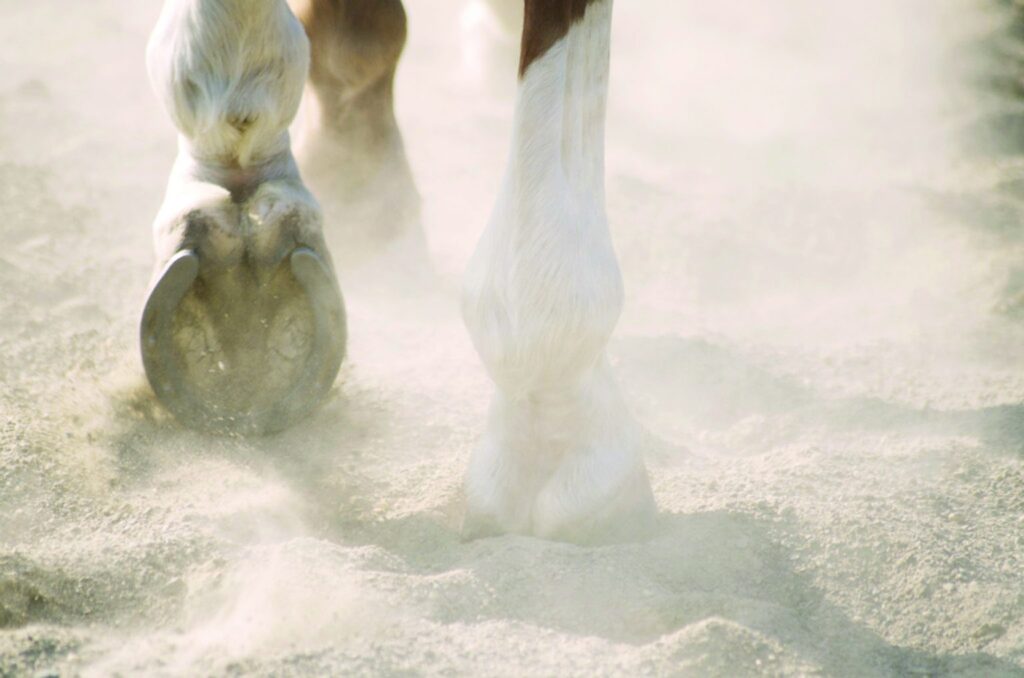
During busy summer months, be sure to maintain regular farrier visits, at least every four to six weeks for most horses. If shoes are loose or hooves need attention, don’t wait for the next appointment; contact your farrier and take care of the problem right away. Finally, use hoof pads or boots if you do a lot of riding on hard or rocky ground, and watch for lameness caused by sole bruises or abscesses.

Total
0
Shares
Share 0
Tweet 0
Pin it 0
rmj

Previous Article
  • Equine Health

Equine Stem Cells Rein In Bacteria

  • October 20, 2020
  • rmj
View Post
Next Article
  • Julie Christie
  • Showjumping
  • Training

Rate My Ride – Showjumping

  • October 20, 2020
  • rmj
View Post
You May Also Like
View Post
  • Education
  • Equine Health
  • Equine Organizations

Why Digestive Health Is the Foundation of Every Horse’s Wellbeing

  • Chris Grambort
  • February 10, 2026
View Post
  • Equine Health
  • Equine Organizations

Avoiding A Lameness Exam

  • Larry Grambort
  • March 10, 2025
View Post
  • Equine Health
  • Feed

Maintain Your Horse’s Gut – Keep Them Hydrated During Summer Months To Maintain Health And Energy

  • Larry Grambort
  • March 5, 2025
View Post
  • Equine Health
  • Feed

What Is “Vegetable” Oil?

  • Larry Grambort
  • March 4, 2025
View Post
  • Equine Health
  • Training

Music Calms Horses’ Emotional State

  • Larry Grambort
  • March 4, 2025
View Post
  • Equine Health
  • Feed

Add A Serving Of Caution To The Tender Spring Grass

  • Larry Grambort
  • March 3, 2025
View Post
  • Equine Health
  • Uncategorized

Biomechanics Of Arena Footing

  • Chris Grambort
  • March 2, 2025
View Post
  • Equine Health
  • Equine Organizations

US Army Caisson Horses: Protecting an American Treasure

  • Larry Grambort
  • March 2, 2025

Leave a Reply Cancel reply

Your email address will not be published. Required fields are marked *

Follow Us
Facebook
Trending Posts
  • 1
    Rebuilding The Horse’s Hoof For Soundness & Health
    • March 15, 2021
  • 2
    Managing COPD & Allergies In The Horse With A Herbal Blend
    • January 15, 2021
  • 3
    Rebuilding Your Horse’s Core For Health And Soundness
    • October 16, 2020
  • 4
    Horse Anxiety And Adaptogens
    • June 17, 2020
  • 5
    Scratches, Rain Rot & Skin Allergies
    • October 17, 2020

CLICK HERE FOR NATIONAL TRAIL GUIDE

About

Equine Monthly LLC PO Box 217. Osseo, WI 54758

Social:
  • https://www.facebook.com/equine.monthly

Phone: 817-307-5944

@2026 Equine Monthly. All Rights Reserved

Input your search keywords and press Enter.