By: Juliet M. Getty, Ph.D.
Veterinarians Are Considering Lecithin For Treating & Preventing Ulcers
Your horse has an ulcer? “Give it omeprazole.”
Your horse is traveling on a long trip? “Give it omeprazole.”
Your horse is taking pain medication? “Give it omeprazole.”
Sound familiar?
Omeprazole, produced by Merial as GastroGard® and the less concentrated Ulcer-Gard®, is the go-to drug for all these reasons and more. One of my clients recently said, “The people at my barn feed omeprazole like it’s candy!”
Does omeprazole have any benefits?
Yes, particularly for ulcers that are found in the upper squamous region of the stomach that is not protected by a mucus layer. Short term usage is usually not problematic as long as care is taken to wean the horse off of it, lest there be a rebound acid effect.
But usage beyond 4 weeks, or giving your horse omeprazole for other reasons, is not a good idea. Firstly, it almost completely eliminates stomach acid. Stomach acid should not be treated as a nuisance and removed! It is absolutely necessary for protein digestion. Without it, your horse can experience protein deficits, which can result in loss of muscle, depressed immune function, poor digestion, and hormonal imbalances.
In addition, stomach acid is your horse’s first line of defense against damaging microbes that he may pick up off the ground. Furthermore, omeprazole inhibits calcium and magnesium absorption, as well as other minerals, potentially damaging metabolic pathways and bone health.
But there is a better way
Many veterinarians are finding the use of lecithin, along with apple pectin, to be very intriguing in its apparent health benefits in preventing and treating gastric lesions. [1] And more recently, it has been used for racehorses (who typically suffer from ulcers), [2] as well as horses who experience forage restriction. [3] And if omeprazole is used initially for existing ulcers, lecithin with apple pectin can be used as a “second tier” treatment after a short term course of GastroGard®, to further heal irritated tissues.
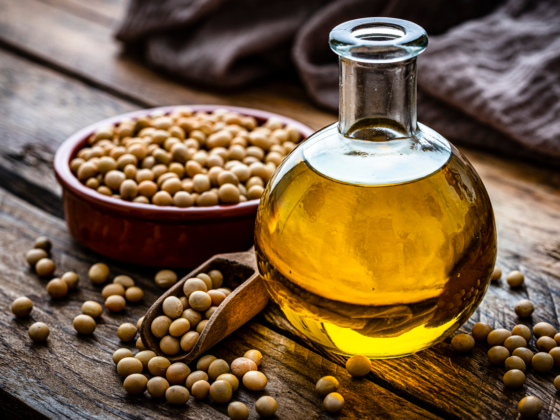
Lecithin is the common term of a phospholipid known at phosphatidyl choline (PC). PC is a naturally occurring substance, incorporating itself into cell membranes; it is the most abundantly found phospholipid in animal and plant cells, and is commonly derived from soybeans, though can be derived from other plants. Chemically, it primarily consists of essential fatty acids, linoleic acid (omega 6) and alpha linolenic acid (omega 3), along with a molecule of choline (an essential B vitamin like nutrient).
Apple pectin, when combined with lecithin, offers a synergistic approach in avoiding ulcers. Pectin is a water-soluble fiber which on the gastric mucosal membranes, protecting them against the corrosive effect of stomach acid. This combination is perfect for horses that are on any type of pain medication, particularly NSAIDs such as phenylbutazone (bute), Flunixin (banamine), or long term usage of Firocoxib (Equioxx or Previcox). It can also be beneficial in preventing the ulcers that can develop from external stressors such as isolation, travel, showing, or the demands of training.
Lecithin granules and apple pectin can be purchased in any health food store, or in bulk through online providers. I recommend feeding ½ cup of lecithin plus 2 Tablespoons of apple pectin once or twice daily, or you can purchase them together as a supplement for horses.[4]
[1] Venner, M., Lauffs, S., Deegen, E., 1999. Treatment of gastric lesions in horses with pectin-lecithin complex. Equine Veterinary Journal Supplement, April, 29, 91-96.
[2] Sykes, B.W., Sykes, K.M. & Hallowell, G.D., 2013. Efficacy of a combination of a unique, pectin-lecithin complex (Apolectol), live yeast, and magnesium hydroxide in the prevention of EGUS and faecal acidosis in Thoroughbred racehorses: A randomized, blinded, placebo controlled clinical trial. Equine Veterinary Journal, 45, 16.
[3] Woodward, M.C., Huff, N.K., Garza, Jr., F., et.al., 2014. Effect of pectin, lecithin, and antacid feed supplements (Egusin) on gastric ulcer scores, gastric fluid pH and blood gas values in horses. Eleventh International Equine Colic Research Symposium, Dublin, Ireland, July 2014, 7-10.
[4] Another option is a lecithin/apple pectin supplement called Starting Gate (SBS Equine Products) available on Getty Equine Nutrition Free Shipping Store: Juliet M. Getty, Ph.D. is an independent equine nutritionist with a wide U.S. and international following. Her research-based approach optimizes equine health by aligning physiology and instincts with correct feeding and nutrition practices. Dr. Getty’s goal is to empower the horseperson with the confidence and knowledge to provide the best nutrition for his or her horse’s needs.
Dr. Getty’s fundamental resource book, Feed Your Horse Like a Horse, is available in paperback and Kindle versions. The paperback version is available at www.gettyequinenutrition.com. Buy the book there and have it inscribed by the author.
Print and Kindle versions are also available at Amazon; find print version at other online retail bookstores.
The seven individual volumes in Dr. Getty’s topic-centered “Spotlight on Equine Nutrition” series are available with special package pricing at her website, and also at Amazon in print and Kindle versions. Dr. Getty’s books make ideal gifts for equestrians!