Equine Monthly
  • Home
  • ARTICLES
    • Bedding
    • Deworming
    • Dr. Tom Schell, DVM, CVCH, CHN
    • Dressage
    • Education
    • Equine Art
    • Equine Careers
    • Equine Health
    • Equine Organizations
    • Equine Stories
    • Equipment
    • Events
    • Feed
    • Julie Christie
    • Legislation
    • Lynn Palm Equestrian
    • Racing
    • Showing
    • Showjumping
    • Tack
    • Training
    • Travel
    • Uncategorized
    • Youth
  • Events
    • Trail Guide
      • Illinois Trails
      • Iowa Trails
      • Minnesota Trails
      • Nebraska Trails
      • North Dakota Trails
      • South Dakota Trails
      • Wisconsin Trails
    • Expos and Fairs
    • Horse Shows and Clinics
  • ADVERTISE
    • Digital/Web Ads
    • Print Ads
  • CONTACT
Equine Monthly
Equine Monthly
  • Home
  • ARTICLES
    • Bedding
    • Deworming
    • Dr. Tom Schell, DVM, CVCH, CHN
    • Dressage
    • Education
    • Equine Art
    • Equine Careers
    • Equine Health
    • Equine Organizations
    • Equine Stories
    • Equipment
    • Events
    • Feed
    • Julie Christie
    • Legislation
    • Lynn Palm Equestrian
    • Racing
    • Showing
    • Showjumping
    • Tack
    • Training
    • Travel
    • Uncategorized
    • Youth
  • Events
    • Trail Guide
      • Illinois Trails
      • Iowa Trails
      • Minnesota Trails
      • Nebraska Trails
      • North Dakota Trails
      • South Dakota Trails
      • Wisconsin Trails
    • Expos and Fairs
    • Horse Shows and Clinics
  • ADVERTISE
    • Digital/Web Ads
    • Print Ads
  • CONTACT
Home ARTICLES Feeding In Winter
  • Equine Health
  • Feed

Feeding In Winter

  • January 15, 2021
  • rmj
Total
0
Shares
0
0
0

By Dr. Eleanor Kellon

Forage first is always the rule of feeding horses. However, in winter it may not be enough. Staying warm requires a lot of calories!

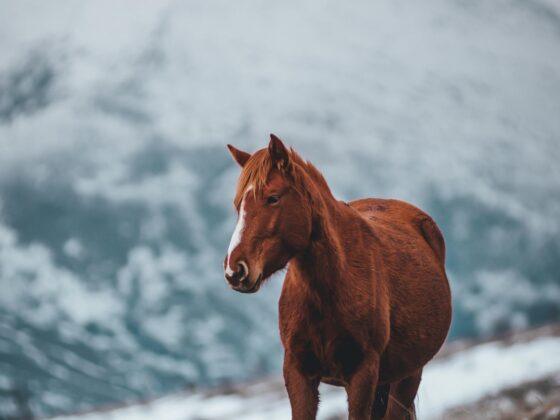
Every horse has a Lower Critical Temperature (LCT). Below this point (air temperature + wind chill) the horse begins to use calories to maintain normal body temperature – and it sure is costly! Studies in people show that just 10 minutes of shivering burns as many calories as an hour of moderate exercise. To make things worse, very cold horses stop eating, drinking and moving around.

Even if not cold enough to shiver, the need to divert calories into heat generation means the horse needs to eat more to maintain body condition too. The usual estimate is an extra 10% of hay for every 10 degrees below the LCT. This means a horse normally eating 20 lbs of hay a day would need 22 if the temperature is 10 degrees lower than its LCT.

Determining the LCT is a little tricky. Foals and older horses are less tolerant of cold than healthy adults. Horses with a lot of body fat or very dense winter coats have a lower LCT than thin horses with short coats. Wet coats lose their insulating properties. Horses with the ability to get out of the wind and precipitation will have lower requirements than those exposed.

A horse in good body condition with a thick coat may have a LCT as low as 5° F while a thin one with a poor coat will start to chill off at 40° F. Young foals and weak seniors rarely tolerate temperatures below 32° F.

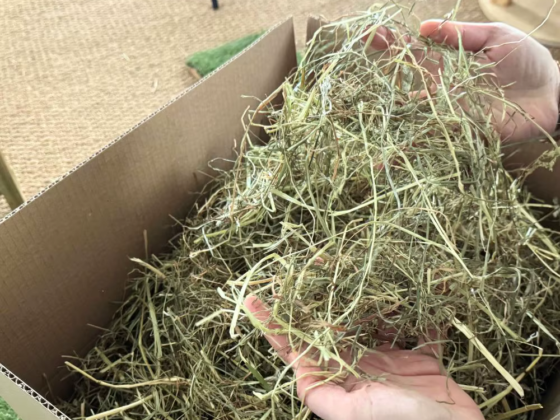
The easiest way to work around the issue of exactly what the LCT might be is to feed hay free choice. Unless the horse has metabolic syndrome they will usually regulate their hay intake to match their needs. However, some horses will need more.

Always check the horses’ body condition every two weeks in winter, making sure to actually feel through the coat to assess fat coverage over the ribs. A number of causes can result in a horse not getting sufficient calories from free choice hay, including:

  • Teeth in poor repair
  • Poor chewing efficiency (older horses)
  • Poor fiber fermentation
  • Competition from herd mates for hay and/or water (horses with insufficient water reduce their hay intake)
  • Poor body temperature regulation (foals, older horses) increases requirements
  • Pregnancy

Horses that have trouble handling loose hay may do well with supplemental feeding of hay cubes or pellets. Since hay has the advantage of providing heat during gut fermentation, this is a good first choice. However, hay is also low in calorie yield so you may have to go to more dense sources like brans, grains or beet pulp. Fat supplementation is especially helpful in this scenario since all the horse needs is extra calories, and fat supplies five times the calories of average grass hay and triple that of plain oats. The Coco-EQ line of liquids and granular high fat sources provides unparalleled palatability with the highest quality cold pressed, unrefined and virgin fats.

Total
0
Shares
Share 0
Tweet 0
Pin it 0
rmj

Previous Article
  • Education

Being Happy When Life Doesn’t Go As Planned

  • January 15, 2021
  • rmj
View Post
Next Article
  • Education
  • Equine Organizations

Strides For Equality Equestrians

  • January 15, 2021
  • rmj
View Post
You May Also Like
View Post
  • Education
  • Equine Health
  • Equine Organizations

Why Digestive Health Is the Foundation of Every Horse’s Wellbeing

  • Chris Grambort
  • February 10, 2026
View Post
  • Equine Health
  • Equine Organizations

Avoiding A Lameness Exam

  • Larry Grambort
  • March 10, 2025
View Post
  • Feed
  • Uncategorized

Switching to Hay?

  • Chris Grambort
  • March 9, 2025
View Post
  • Equine Health
  • Feed

Maintain Your Horse’s Gut – Keep Them Hydrated During Summer Months To Maintain Health And Energy

  • Larry Grambort
  • March 5, 2025
View Post
  • Equine Health
  • Feed

What Is “Vegetable” Oil?

  • Larry Grambort
  • March 4, 2025
View Post
  • Equine Health
  • Training

Music Calms Horses’ Emotional State

  • Larry Grambort
  • March 4, 2025
View Post
  • Equine Health
  • Feed

Add A Serving Of Caution To The Tender Spring Grass

  • Larry Grambort
  • March 3, 2025
View Post
  • Feed

Beyond the Pasture Fence

  • Chris Grambort
  • March 2, 2025

Leave a Reply Cancel reply

Your email address will not be published. Required fields are marked *

Follow Us
Facebook
Trending Posts
  • 1
    Managing COPD & Allergies In The Horse With A Herbal Blend
    • January 15, 2021
  • 2
    Scratches, Rain Rot & Skin Allergies
    • October 17, 2020
  • 3
    Horse Anxiety And Adaptogens
    • June 17, 2020
  • 4
    Rebuilding Your Horse’s Core For Health And Soundness
    • October 16, 2020
  • 5
    Rebuilding The Horse’s Hoof For Soundness & Health
    • March 15, 2021

CLICK HERE FOR NATIONAL TRAIL GUIDE

About

Equine Monthly LLC PO Box 217. Osseo, WI 54758

Social:
  • https://www.facebook.com/equine.monthly

Phone: 817-307-5944

@2026 Equine Monthly. All Rights Reserved

Input your search keywords and press Enter.