By Kirsten Romaguera, 352-294-3313, [email protected]
University of Florida, 2343 Mowry Road, Bldg 69
Gainesville, FL 32611-0810
This study, involving Arabian horses from 12 countries found that some populations maintained a larger degree of genetic diversity and that the breed did not contribute genetically to the modern-day Thoroughbred, contrary to popular thought. This study challenges the common beliefs about the ancient breed.
This study was led by the following international team of scientists;
- The University of Florida’s Samantha Brooks, a UF/IFAS assistant professor of animal sciences;
- Cornell University’s Doug Antczak, the Dorothy Havemeyer McConville Professor of Equine Medicine at the Baker Institute for Animal Health; and
- Andy Clark, the Jacob Gould Schurman Professor in Cornell’s department of molecular biology and genetics.
The group collected and examined DNA samples from 378 Arabian horses from Qatar, Iran, UAE, Poland, USA, Egypt, Jordan, Kuwait, United Kingdom, Australia, Denmark and Canada. The research, published June 16, 2020 in the journal “Scientific Reports,” began in 2014 before Brooks made the move from Cornell to The University of Florida. Brooks said, “ The process required a lot of effort, in part due to traveling to collect the Arabians’ blood and hair samples, as well as natural delays in working with international colleagues to collect and ship other samples.“
The samples were anonymized for data analysis purposes, except to note the horse’s location and categorizing them as endurance competition, flat course racing or show horses. The data set was also expanded using information from past studies on other breeds, which included Thoroughbreds, Persian Arabian, Turkemen and Straight Egyptians.

“The Arabian horse has a special mystique due to the long recorded history of the breed,” Brooks said. “Arabian horse breeders, in particular, know their horse’s bloodlines many generations back. What we found was that in the area where this breed originates – likely the near East region, but we don’t know exactly – there’s a healthy level of diversity. This is particularly evident in populations from Bahrain and Syria, which suggests these are some pretty old populations.”
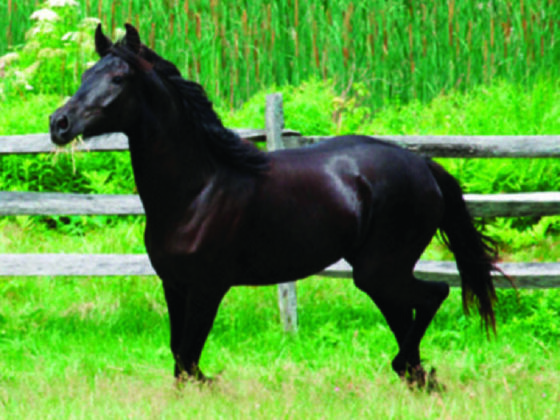
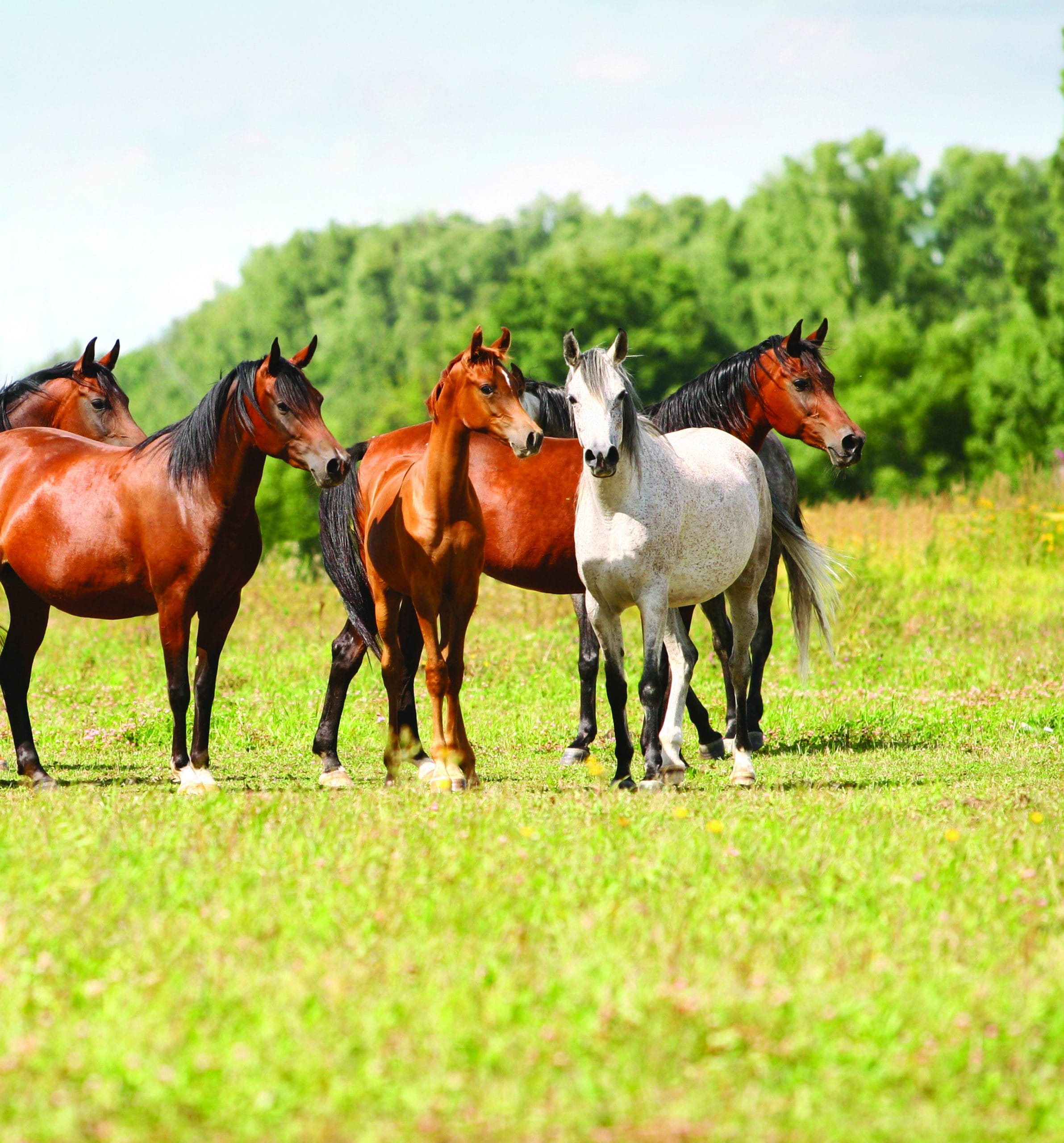
The horse is prized for characteristics like heat tolerance and endurance, as well as its unique appearance, with a dish-shaped facial profile, wide-set eyes, an arched neck and a high tail carriage. It has been exported from its ancestral homeland for centuries, with some modern lineages drawn strictly from these smaller genetic pools, giving the breed a reputation for inbred disorders. While this was true for some groups they tested, Brooks noted, they also found remarkable diversity when considering the breed as a whole.
Brooks contrasted the discovery of more diverse populations with the samples they received from racing Arabians. Another longstanding myth says that the Arabian contributed genetically to the modern Thoroughbred, but the racing Arabians’ DNA told a different story.
“What we found in these samples was not that much Arabian ancestry was part of the Thoroughbred line, but the opposite: that Thoroughbred DNA exists in most of the modern racing Arabian lines, indicating a more recent interbreeding within this group,” Brooks said. “I can’t speculate on the how or why, but this is clearly the story the DNA is telling us.”
Another implication of this study, Brooks said, is the potential to identify the genetic regions that determine some of the Arabian’s unique traits, like their facial profile. This could be expanded to identify the marker for other horse breeds’ head shapes, for example.
The study has a long list of co-authors, with contributors from the University of Tehran, Iran; Weill Cornell Medical College in Qatar; the University of Kentucky; the University of Agriculture in Kraków, Poland; the Hong Kong Jockey Club; the Equine Veterinary Medical Center in Doha, Qatar; and the University of Veterinary Medicine in Vienna, Austria. Elissa Cosgrove from the Clark lab and Raheleh Sadeghi, a visiting scientist from Iran in the Antczak lab, shared first co-authorship of the study.
“An exceptional aspect of this project was the wonderful level of open collaboration and sharing of resources by veterinary geneticists, equine scientists, and horsemen from around the world,” Antczak said. “It was a great pleasure to conduct this global study for the benefit of the horse.”
Funding for this research was provided by a grant from the Qatar National Research Fund with additional support from the Harry M. Zweig Memorial Fund for Equine Research, Arabian Horse Foundation, Animal Health Foundation, Dorothy Russell Havemeyer Foundation, Inc., and a Meinig Family Investigator award.
The mission of the University of Florida Institute of Food and Agricultural Sciences (UF/IFAS) is to develop knowledge relevant to agricultural, human and natural resources and to make that knowledge available to sustain and enhance the quality of human life. With more than a dozen research facilities, 67 county Extension offices, and award-winning students and faculty in the UF College of Agricultural and Life Sciences, UF/IFAS brings science-based solutions to the state’s agricultural and natural resources industries, and all Florida residents. ifas.ufl.edu| @UF_IFAS
The Baker Institute is a free-standing research unit of Cornell’s College of Veterinary Medicine, maintaining its own campus of laboratories, animal facilities, and support services. Scientists at the Baker Institute for Animal Health focus on many aspects of companion animal health and implications to human health, oftentimes working across traditional scientific disciplines to break new ground. Research studies fall within three general areas: infectious disease and immunology, cancer and genetics, and reproductive biology. vet.Cornell.edu/Baker