The book, “Afraid to Ride” introduced me to the value of grazing in-hand. The preteen novel by C.W. Anderson tells of a teen injured in a riding accident causing her to give up on riding.
In the story, the girl’s father buys a troubled mare for her to care for. To help the mare recover from the mishandling she had received, the girl regularly halters the mare and leads the horse out to graze while she holds the lead rope.
The time the teen and horse spent grazing and going on walks helped form a bond and enabled them to heal from their traumatic experiences. While the story was fictional, it exhibited Anderson’s knowledge and understanding of horse behavior and horse handling.
The story also illustrated the axiom, “If you want a friend, be one.” If you want your horse to become your friend and to bond, you will need to do things it enjoys. How long would you stay friends with someone who only did what she wanted to do and not the things you enjoyed?
The same holds for our horses, and it goes without saying, grazing is one of its favorite things to do.
Along with creating a bond, grazing in-hand can also supplement your horse’s diet. Grass is, and will always be, the best source of nutrition for horses.
When your pastures become less productive, your horse will appreciate the opportunity to graze on grass growing on un-mowed areas and roadside ditches.
In addition to the benefits already mentioned, hand grazing a horse in a roadside ditch will expose it to traffic, letting it learn to accept vehicles driving past.
One caution about roadside ditches is that some may have been sprayed to control weeds. This practice is becoming less common, but it’s a good idea to check with the entity in charge of roadway maintenance before letting your horse graze in roadside ditches.
In the spring, in-hand grazing can get your horse’s digestive system acclimated to the fresh nutrition-rich grass, helping to prevent laminitis by limiting the amount your horse ingests.
Taking your horse out for in-hand grazing can also be a training session in leading. If your horse learns to pull against the lead when it’s led out to graze in-hand, it will develop a habit of pulling on the lead. Such behavior can develop into a habit of your horse leading you instead of you leading it.
To prevent your horse from pulling on the halter and lead when you take it out to graze, you will need to teach it a cue to let it know when it can lower its head. The first step in teaching the “okay-to-graze” cue is to have your horse stand still without pulling on the lead.
This might take a bit of patience with some horses, but persistence will pay off in the end.
Your horse should stand completely still and wait for you to give it the cue signaling it that it’s okay to graze. When your horse is standing quietly, release your hold on the lead closest to your horse while keeping your other hand on the other end of the lead. Then step away from your horse allowing the slack in the lead to fall to the ground. This will be the signal letting your horse know it can drop its head and begin grazing.
It might take a bit of time for some horses to understand what you are queuing it to do; but eventually, your horse will lower its head and start grazing.
You should be able to train your horse to pick up its head to move on to another spot to graze, by moving close to its head and picking up the lead again, about a foot to 18 inches from the lead rope snap.
You shouldn’t have to play a game of tug-of-war with your horse to queue it to raise its head. If your horse doesn’t raise its head when you put pressure upward on the lead and halter, swing your foot by its head. Your horse should raise its head in response to the commotion caused by your foot.
If a swinging foot doesn’t work well, you could swing the loose end of the lead rope or the lash of a driving whip to signal your horse to lift its head.
Reward your horse for raising its head by leading it to another spot to graze, making sure to have it stand quietly until you give it the queue that it’s okay to graze.
Moving from one spot to another while grazing in-hand imitates horses’ natural tendency to roam while grazing. In the wild, horses will move often while grazing to prevent overgrazing and as protection against predators.
Hand-grazing can also be part of the 15-minute program for self-improvement. If you lead your horse for a distance away from its pasture to a grazing spot, you are not only exercising your equine partner, you are including physical activity in your life as well. Your horse will also become more familiar with new surroundings. This is beneficial for exposing your horse to a trail you intend to ride down later.
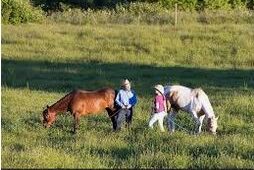
As mentioned in the first Hobby Horse Trainer column, you can also cultivate your relationship with your family members while hand-grazing your horse. Do this by inviting your children or spouse to join you for one-to-one conversations while giving your horse grazing time.
The Zen of grazing in-hand can also serve as a time of decompression from your hectic life.
Make grazing in-hand a part of your horse training program and you just might be amazed how rewarding it can be.